An Ercol Guide
The Complete Guide to Ercol Furniture
From Lucian Ercolani’s High Wycombe workshop to some of Britain’s most recognisable chairs, tables and sideboards, discover the history, woods, construction and enduring appeal of Ercol furniture.
Why Ercol still matters.
Ercol occupies a very different place in British furniture history to many other mid-century manufacturers. Where some makers became known for teak sideboards and modular cabinet furniture, Ercol became known for visible craftsmanship: steam-bent forms, shaped seats, elegant spindles, honest construction and a careful use of solid woods.
The company’s most recognisable pieces are practical, light in appearance and highly usable. They work in period homes, modern kitchens, minimalist rooms and more traditional interiors, which is one of the reasons Ercol remains so collectable today.
For buyers and collectors, the appeal is not just the name. It is the combination of design, timber, construction and longevity.
A brief history of Ercol
Ercol’s story begins in High Wycombe, a town deeply connected with British chair making, and develops through the post-war period into one of the most recognisable names in British furniture.
Founded in High Wycombe
Lucian R. Ercolani founded his furniture factory in High Wycombe, Buckinghamshire, an area already known for furniture and chair manufacture.
Utility furniture
During and after the Second World War, Ercol became associated with practical, well-made furniture suited to the needs of British homes.
The Windsor range
The Windsor range brought together traditional Windsor chair influences and modern production methods, becoming central to Ercol’s identity.
Still in production
Ercol continues to manufacture furniture, with modern collections still drawing on the company’s history of craftsmanship and natural materials.
Craftsmanship over decoration.
Ercol furniture is often at its best when the construction is visible. The strength of the design comes from proportion, joinery and wood selection rather than heavy ornament. Spindles, bowed backs, shaped elm seats and clean table forms give many Ercol pieces their instantly recognisable character.
This is why Ercol works so well in modern interiors. The pieces have enough character to stand out, but they are not overly complicated. They are designed to be used.
The woods used by Ercol
Ercol is especially associated with the combination of elm and beech, with ash also appearing in later and contemporary production. Understanding the woods helps explain both the look and the construction of the furniture.
Elm
Elm is strongly associated with Ercol seats and table tops. It has a distinctive, lively grain and gives Windsor chairs, plank tables and many mid-century Ercol pieces their warmth and visual movement.
Beech
Beech was widely used for legs, spindles, stretchers and structural parts. It is strong, consistent and well suited to turning and bending, making it ideal for Ercol’s chair construction.
Ash
Ash is used in a number of later and contemporary Ercol collections. It is strong, flexible and attractive, with a clear grain that suits lighter, more natural finishes.
Important Ercol ranges and designs
These are the Ercol ranges and designs most relevant to collectors, interiors buyers and the type of stock we regularly handle at Hus & Home.

Goldsmith
The Goldsmith chair is one of Ercol’s most recognisable dining chair designs. Its tall spindle back, shaped seat and arched top rail give it a strong silhouette while remaining light and practical.
Goldsmith chairs are particularly popular because they work well around both Ercol dining tables and mixed vintage interiors. Original blue or gold labels, clean joints and good structural condition are all important when assessing examples.

Quaker
The Quaker chair is another classic Ercol form, known for its high arched back and elegant spindle construction. It has a slightly more dramatic profile than many standard Windsor dining chairs.
Quaker chairs are often found as dining chairs, carvers or mixed sets. They remain popular because they combine comfort, sculptural shape and everyday usability.

Windsor and plank tables
Ercol’s Windsor influence extends beyond chairs into tables, sideboards and storage furniture. Plank tables are especially valued for their solid elm tops and practical proportions.
The best examples show strong elm grain, simple construction and the honest, functional approach that defines much of Ercol’s mid-century output.

Old Colonial
Old Colonial sits apart from Ercol’s lighter mid-century ranges. It uses a darker, more traditional finish and styling that suits period interiors, country homes and rooms where a warmer, more established look is wanted.
Pieces such as court cupboards, buffets and nests of tables offer a very different side of Ercol: still practical and well-made, but with a more traditional visual language.

Dining sets
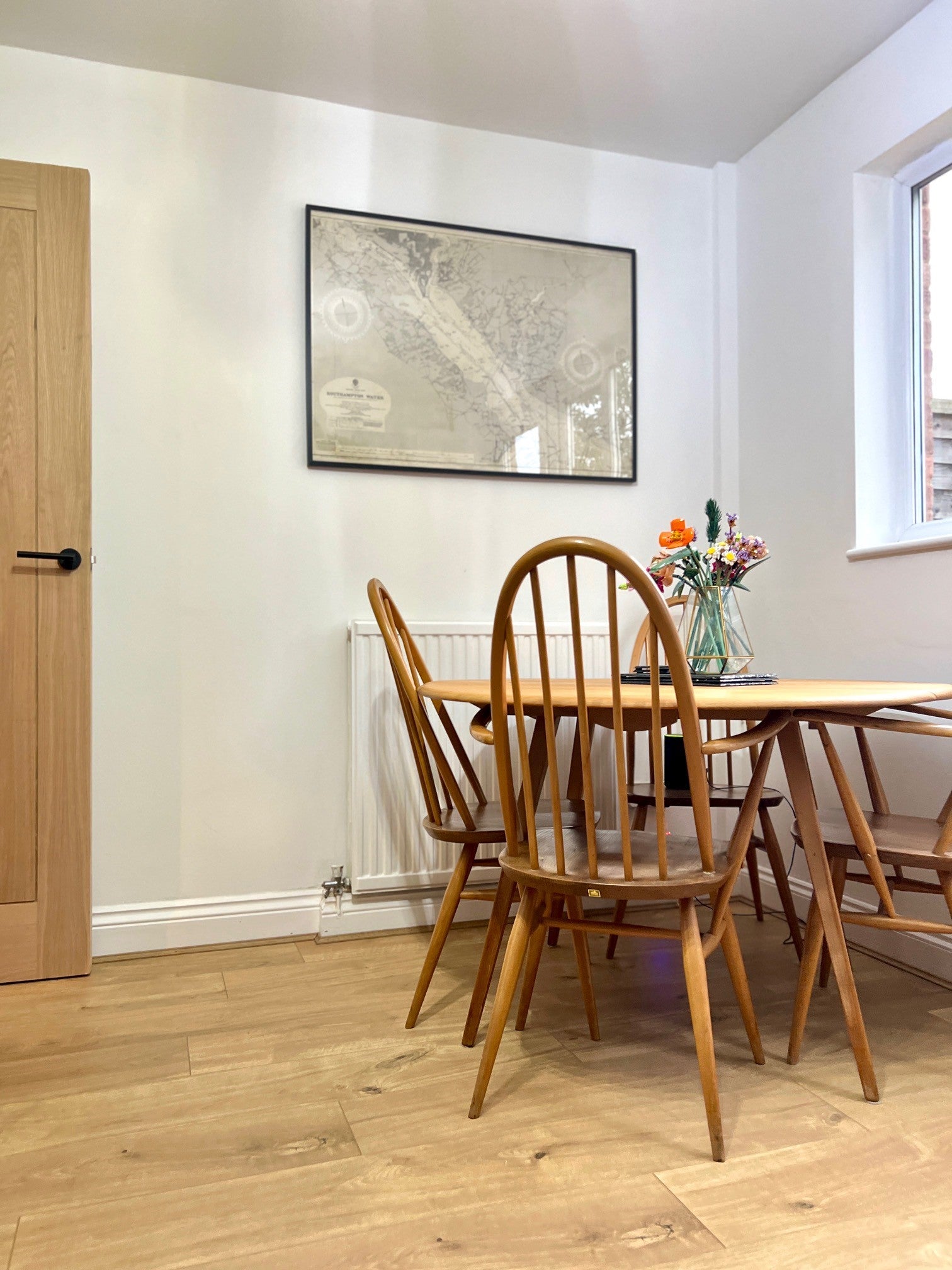
Ercol dining furniture remains one of the most usable ways to bring vintage British design into a modern home. The combination of strong chair construction, shaped seats and practical table sizes makes it easy to live with.
In many homes, an Ercol dining set gives the room a softer and more natural feel than newer mass-produced furniture, especially when paired with simple lighting and clean interiors.
Sideboards and cabinet furniture
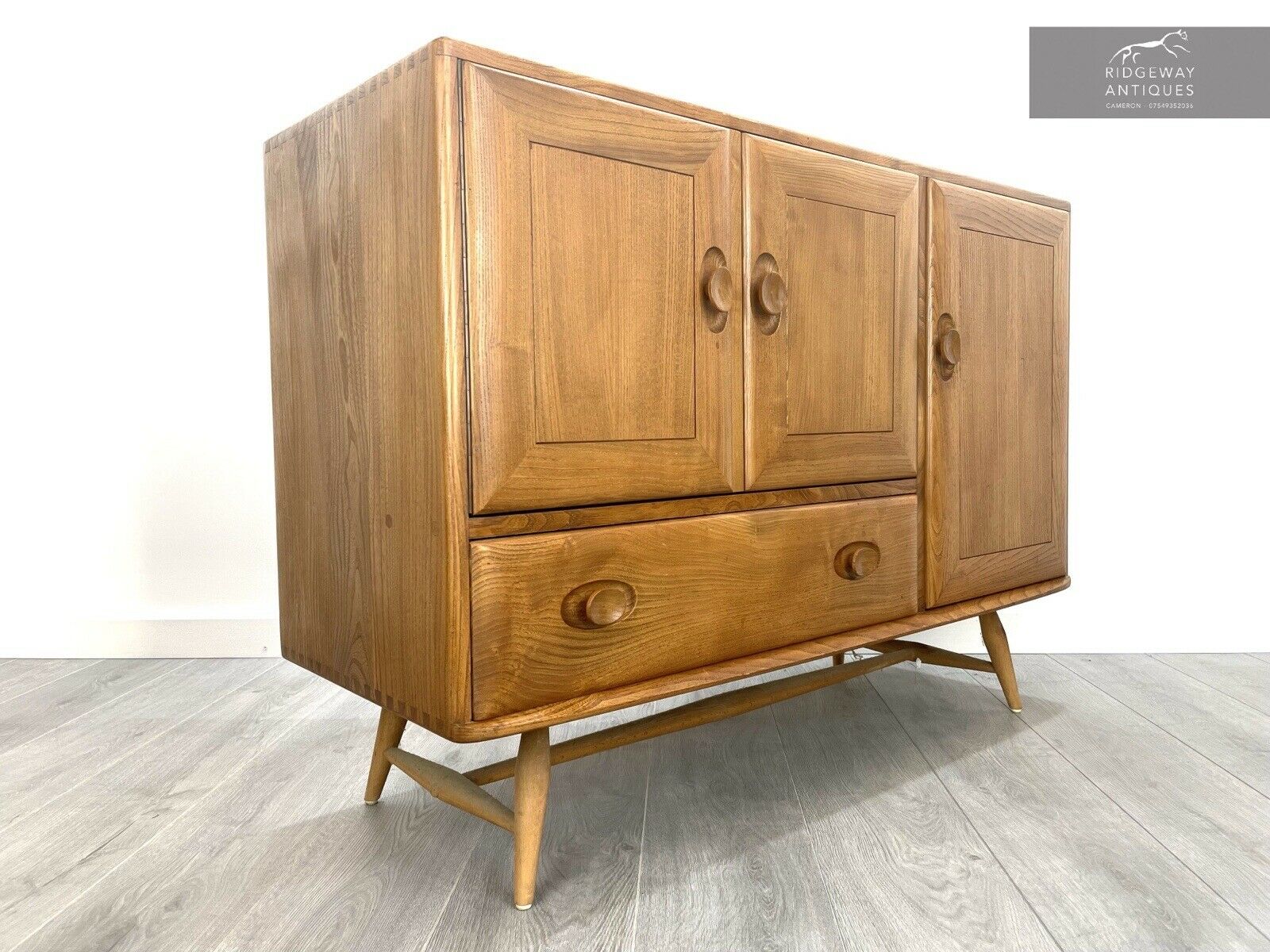
Although chairs and dining furniture are often the first things people associate with Ercol, the company also produced desirable cabinet pieces, including sideboards, dressers, cupboards and storage furniture.
These pieces tend to appeal to buyers who want practical storage with a softer, lighter character than many teak sideboards from the same period.
How to identify genuine Ercol furniture
Original labels are helpful, but Ercol can often be recognised through construction and design details. Look for the characteristic shaped elm seats, turned beech legs and spindles, wedge joints, clean proportions and the distinctive Windsor-influenced forms.
As a general guide, blue Ercol labels are commonly associated with pieces from the 1960s and 1970s, gold labels are usually seen on later 1980s and 1990s examples, gold medallions are often associated with the 1990s into the 2000s, and rectangular Ercol badges are commonly found on more recent pieces from the 2010s onwards.
Labels should always be considered alongside the construction, finish and design of the piece. As with all vintage furniture, condition matters: check for loose joints, repairs, splits, heavy sanding, replaced parts and finish quality.
Why collectors still love Ercol.
Ercol furniture has remained desirable because it is not just decorative. It is useful, well-balanced and generally robust enough to continue being used decades after it was made. A good set of Ercol chairs, a plank table or a well-kept sideboard can still serve a modern home without feeling like a museum piece.
The continued interest in Ercol also reflects a wider movement towards sustainable interiors. Buying vintage keeps well-made furniture in use and gives homes a more individual feel than new mass-produced alternatives.
A small High Wycombe story.
When Hus & Home exhibited at the Designer Outlet, a visitor told us a story that stayed with us. She had worked at the Ercol factory, while her husband worked at the G-Plan factory. The two factories sat opposite one another, separated by a railway line, and their offices looked across the tracks towards each other.
During the working day they would see one another through the office windows and wave across the railway line. It is a simple story, but it captures something special about High Wycombe furniture making: these were not just brand names, but real factories, real people and a local industry that shaped British homes for generations.
References and further reading
This guide uses a small number of external references for historical context, including the official Ercol timeline, the Wycombe Museum history of Ercol, and Ercol’s own article on the Windsor chair.