
The Guide to G Plan
The Complete Guide to G-Plan Furniture
From the origins of E. Gomme in High Wycombe to iconic ranges such as Fresco, Brasilia, Astro and Quadrille, discover the history of one of Britain’s most influential furniture manufacturers.
Why G-Plan still matters
G-Plan is one of the most recognisable names in British mid-century furniture. Known for practical storage, coordinated room ranges and strong modernist styling, the brand helped change how British homes were furnished during the post-war period.
For collectors today, G-Plan represents a particularly usable form of vintage design. The pieces were well made, widely used and designed for real homes rather than museums. That is why sideboards, dining tables, chairs, coffee tables and nesting tables from the best-known ranges still sit comfortably in modern interiors.
This guide covers the company’s history, key ranges, materials, identification points and why G-Plan remains so collectable today.
At a glance
Founded: The story begins with E. Gomme Ltd of High Wycombe.
G-Plan launch: The G-Plan brand was launched in 1953.
Most collected era: 1950s to 1970s, particularly the teak and Scandinavian-influenced ranges.
Popular ranges: Fresco, Brasilia, Astro, Quadrille, Brandon, Librenza, China White and Young Ideas.
From High Wycombe cabinetmaking to national recognition
The G-Plan story sits within the wider history of High Wycombe furniture making. E. Gomme Ltd developed from traditional cabinetmaking into one of Britain’s best-known furniture manufacturers, before G-Plan became a major name in post-war home furnishing.
E. Gomme Ltd was founded in High Wycombe, an area closely associated with British furniture production.
The G-Plan brand was launched, offering coordinated furniture ranges at a time when British homes were becoming more design-conscious.
G-Plan became strongly associated with modern interiors, teak finishes, sculptural handles and Scandinavian-influenced forms.
Original vintage G-Plan remains popular with collectors, interior designers and buyers looking for usable mid-century furniture.
Woods used in G-Plan furniture
Understanding the materials used by G-Plan helps when identifying, dating and describing original pieces. Like many British manufacturers, G-Plan moved with changing tastes over the decades, from earlier oak pieces through to the teak-led mid-century period.
Oak
Earlier G-Plan and E. Gomme pieces often used oak, reflecting more traditional British furniture tastes before the stronger Scandinavian influence of the mid-century period.
Teak
Teak was popularised in the mid to late twentieth century by leading furniture manufacturers, with Danish design having a major influence. G-Plan followed suit, using teak across many of its most recognisable mid-century ranges.
Afromosia
Afromosia is most closely associated with handles and decorative detailing on G-Plan ranges, rather than being the primary timber used for whole cabinet pieces.
Important G-Plan ranges to know
G-Plan produced a wide variety of ranges, but some designs have become especially desirable because of their shape, construction, materials and recognisable detailing.
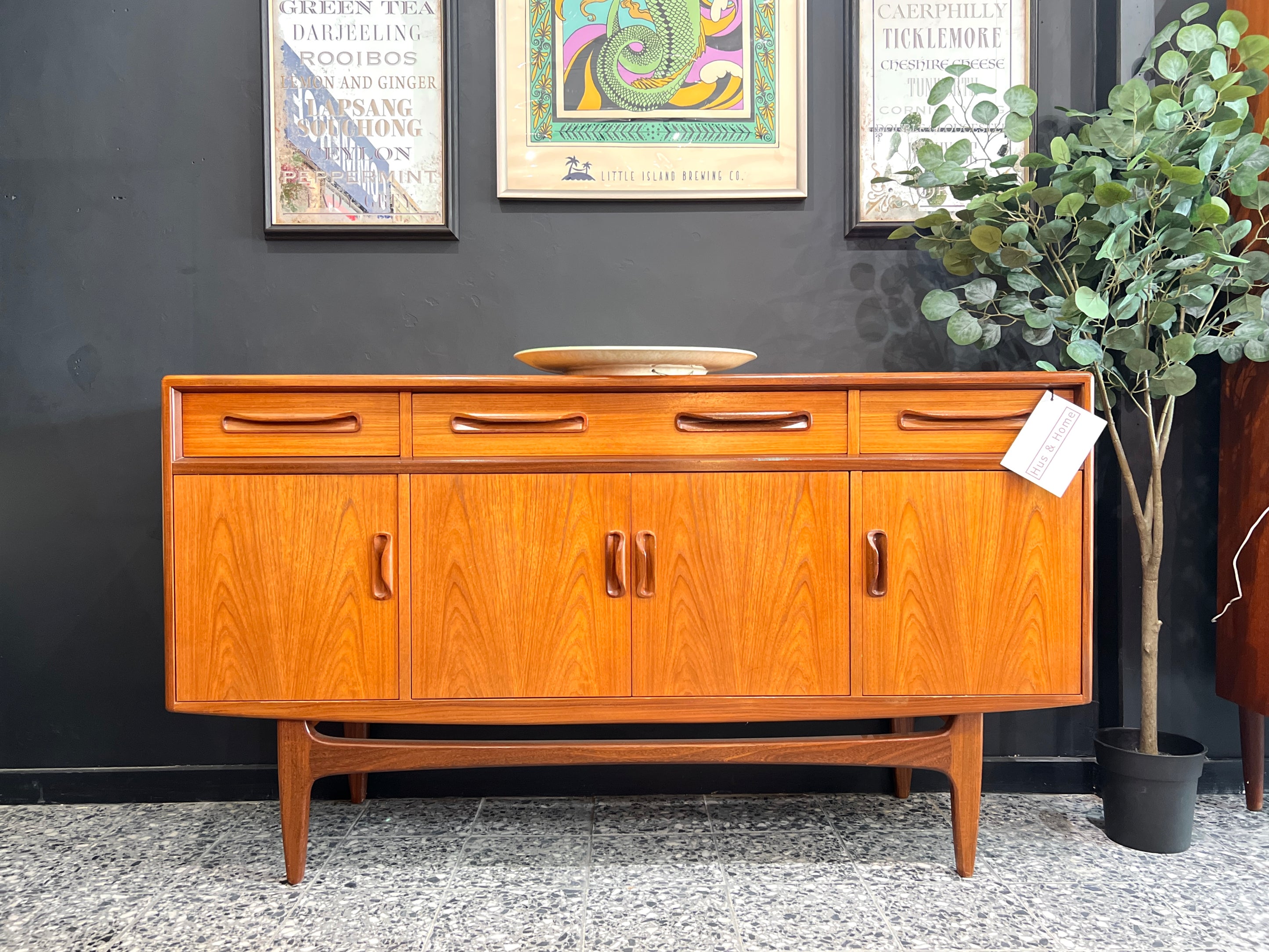
G-Plan Fresco
Fresco is one of the most recognisable and collected G-Plan ranges. It is known for its flowing, sculpted appearance, warm teak finish and practical storage. Sideboards from the Fresco range are particularly popular because they combine strong design with everyday functionality.
Typical Fresco details include shaped handles, softened edges and a more organic form than many earlier British furniture ranges.
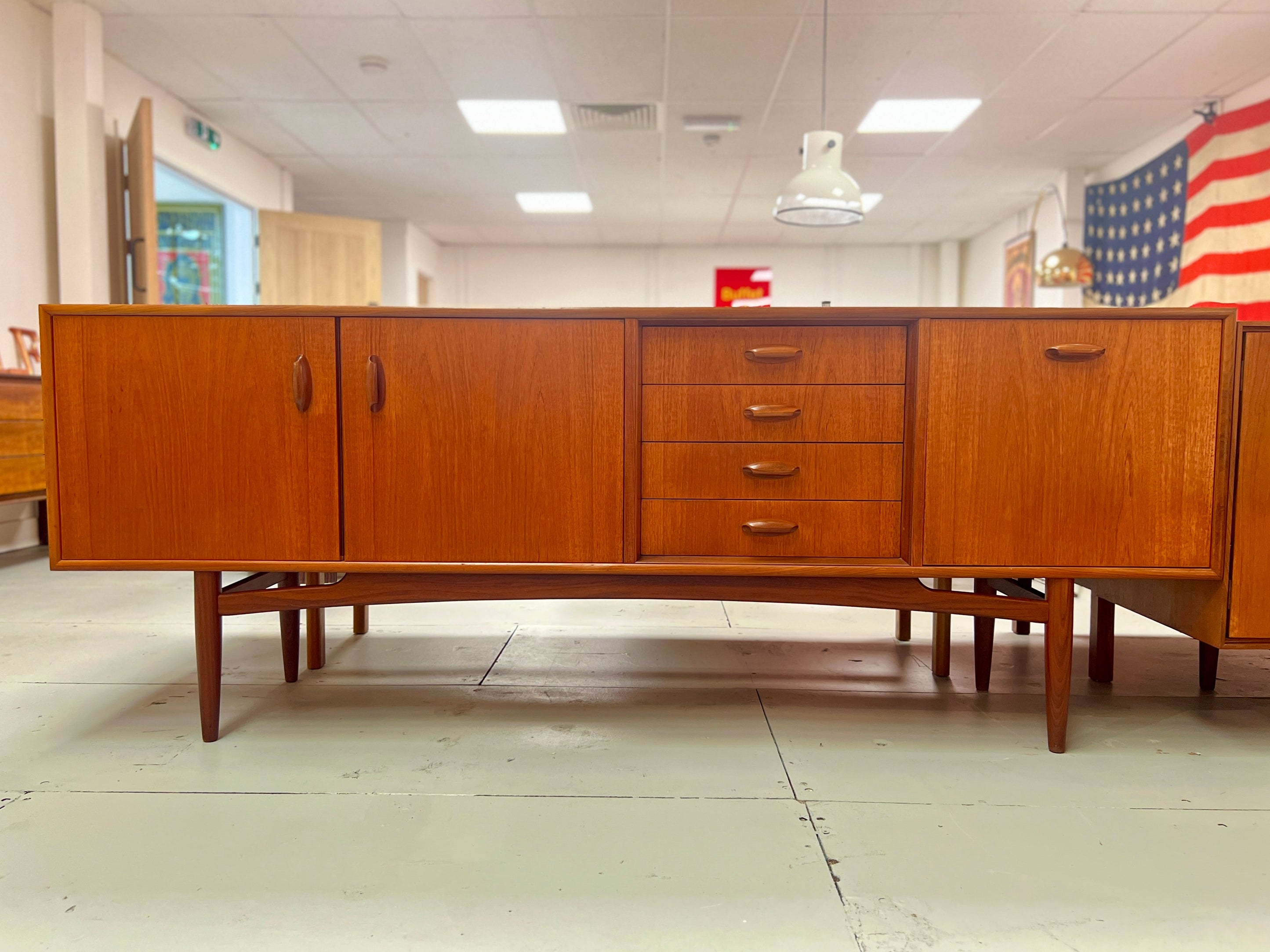
G-Plan Brasilia
Brasilia is a bold and distinctive range, instantly recognisable for its circular handle detailing and architectural drawer fronts. Compared with Fresco, Brasilia has a stronger visual presence and a more dramatic mid-century character.
Brasilia pieces are highly sought after by collectors because the design feels both decorative and functional, making them particularly effective as statement pieces in living rooms and dining spaces.
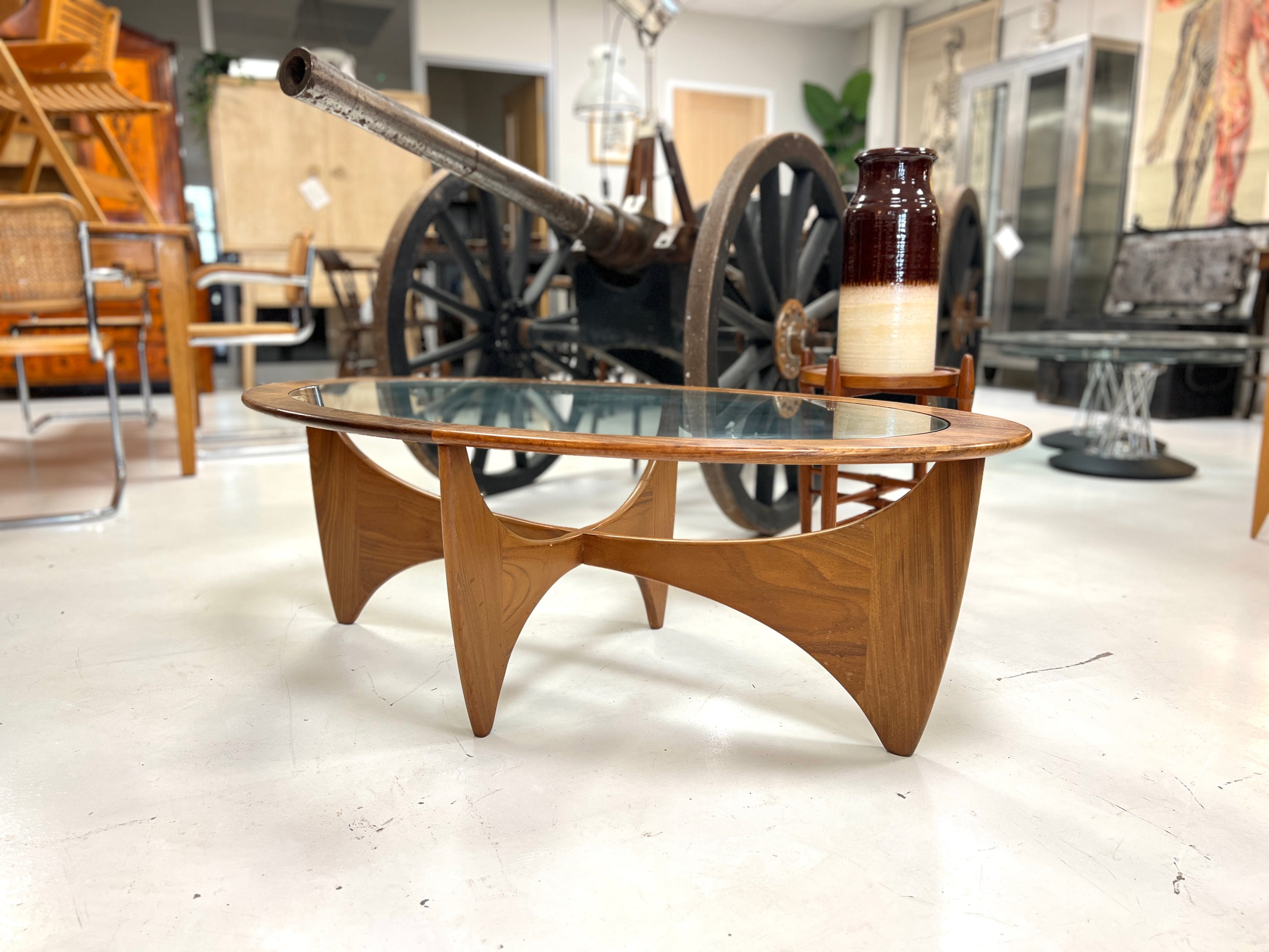
G-Plan Astro
The Astro range is best known for the iconic Astro coffee table, one of the most recognisable British mid-century table designs. Its curved frame and glass top make it visually light while still giving a room a clear vintage focal point.
Astro tables remain popular because they work well in both period interiors and modern rooms, particularly where the aim is to add one strong mid-century design piece without overwhelming the space.
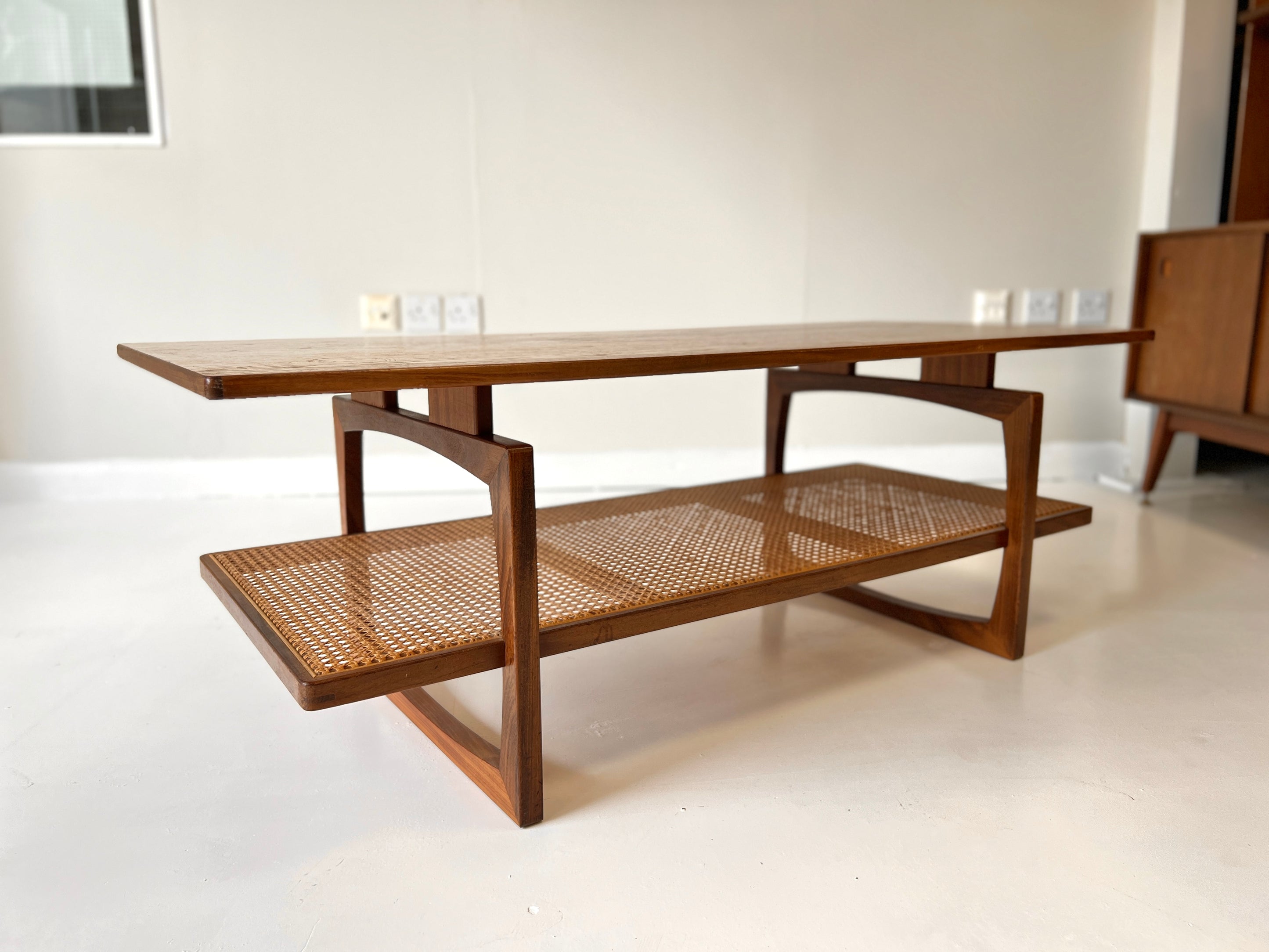
G-Plan Quadrille
Quadrille is associated with elegant, lightweight tables and occasional furniture. The range is often recognised by its refined proportions, inset surfaces and distinctive leg forms.
Quadrille pieces are especially useful in modern interiors because they add vintage character without feeling heavy or overly dominant.
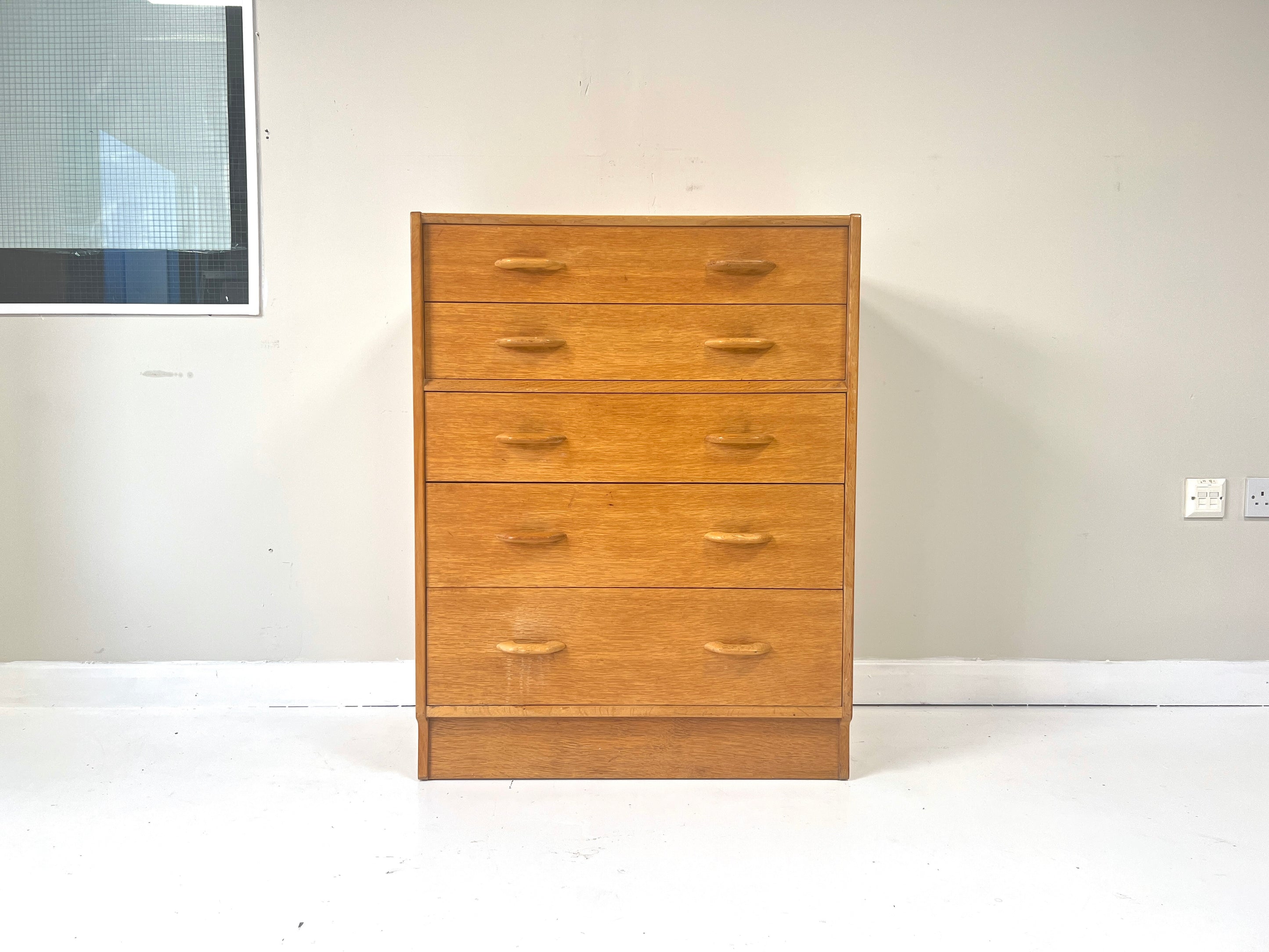
G-Plan Brandon
Brandon reflects an earlier and more restrained side of G-Plan design. It has a classic British feel, often with cleaner lines and a more traditional construction style than the later sculptural teak ranges.
For buyers who prefer mid-century furniture with a quieter look, Brandon can be a very practical and attractive option.
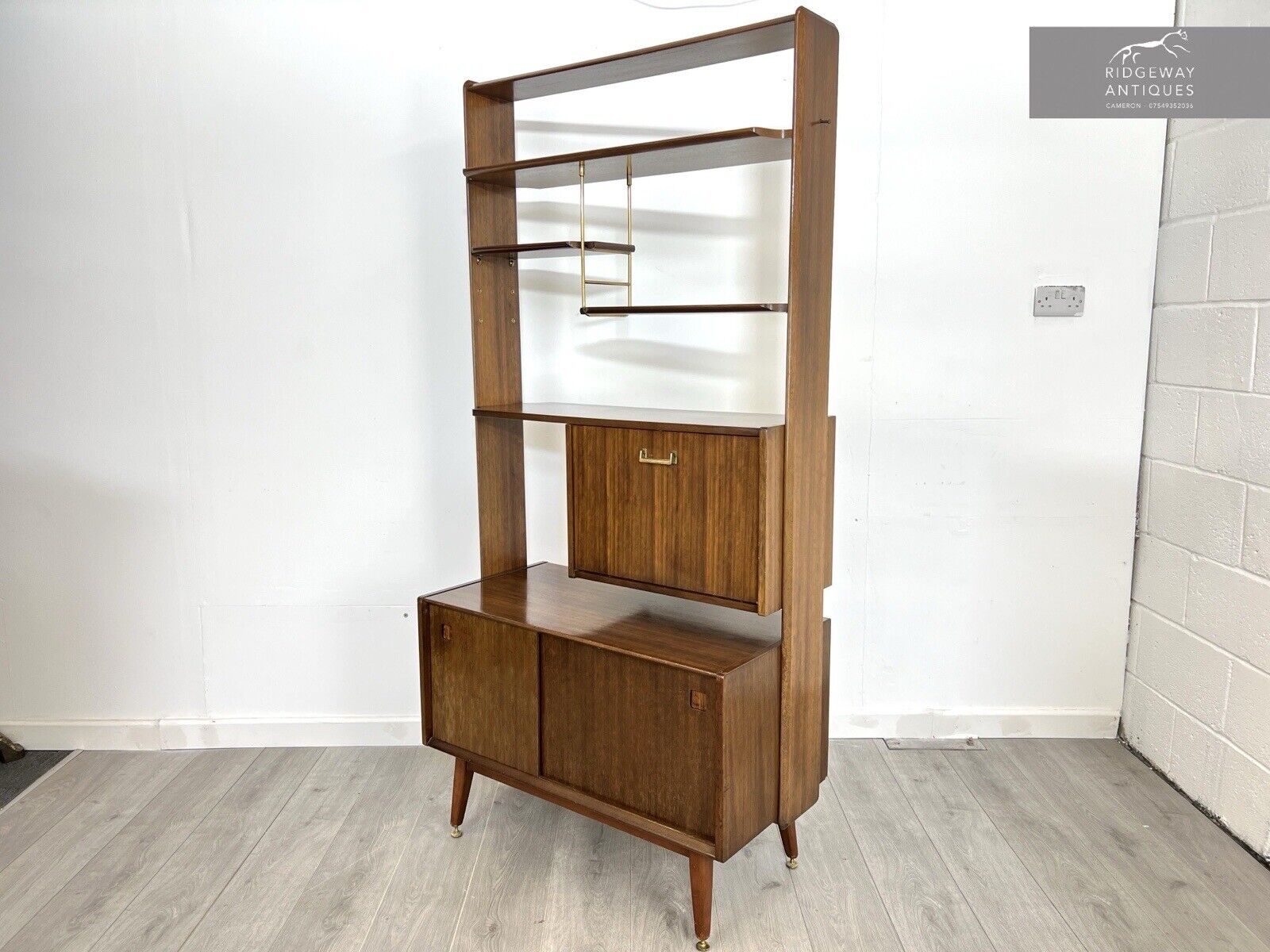
G-Plan Librenza
Librenza is one of G-Plan’s most stylish and recognisable ranges, often associated with a more refined and architectural look. The designs can feel lighter and more elegant than some later teak ranges, making them particularly appealing to collectors.
Librenza pieces are valued for their design presence, proportions and ability to sit well in both vintage and contemporary interiors.
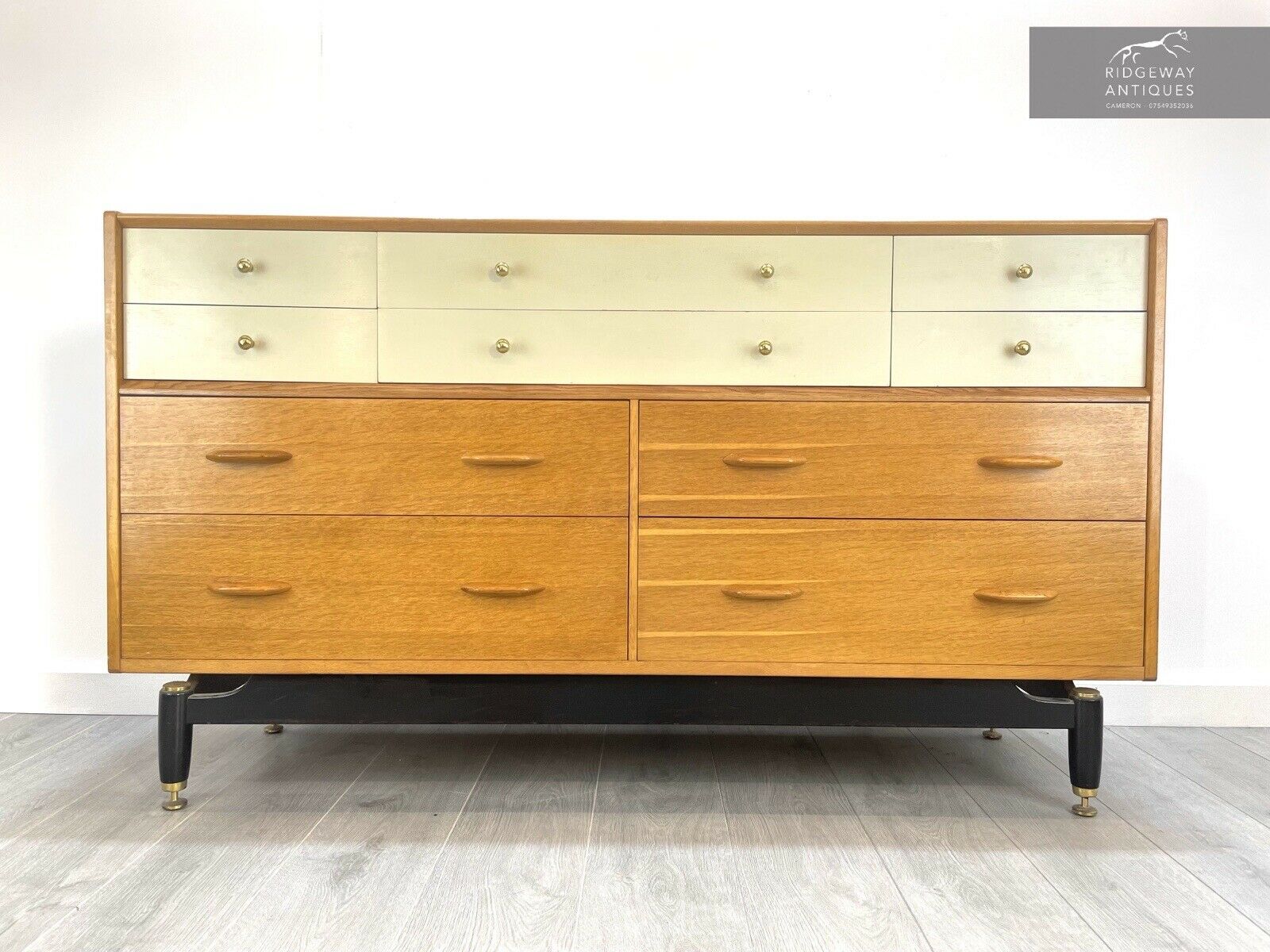
G-Plan China White
China White represents a different side of G-Plan, moving away from the darker teak tones most people associate with mid-century furniture. The lighter finish gives the pieces a softer, more decorative appearance.
This makes China White particularly suitable for bedrooms, lighter interiors and homes where a subtler vintage look is preferred.
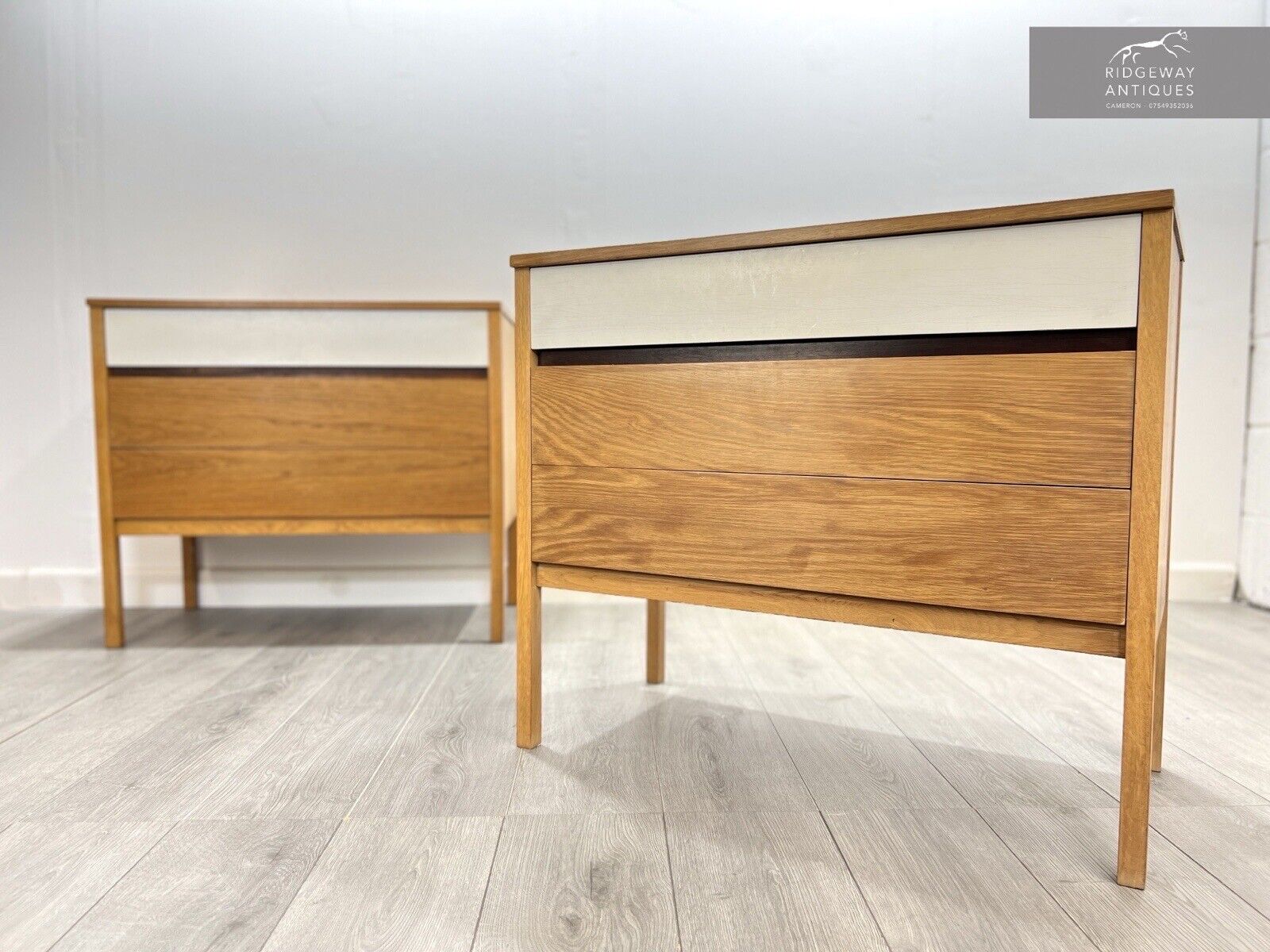
G-Plan Young Ideas
Young Ideas was designed for a changing market, with pieces that feel more flexible, compact and suited to modern homes. The range often has a slightly fresher, more casual character than the heavier cabinet furniture associated with some earlier collections.
It remains useful today because the furniture is often practical, well proportioned and easy to place in contemporary interiors.

How to identify genuine G-Plan furniture
Genuine G-Plan furniture can often be identified through a combination of labels, construction quality, design details and original fittings. Not every piece retains its label, but original markings are always helpful when confirming a piece.
Common places to check include the inside of drawers, cabinet interiors, rear panels, underside rails and the underside of tables or chairs.
Why G-Plan remains collectable
G-Plan furniture remains popular because it combines design, build quality and usability. Many pieces are still strong enough for everyday use decades after manufacture, while the styling works naturally in both period and modern interiors.
Fresco, Brasilia, Astro and other recognisable ranges continue to attract attention from collectors, designers and buyers who want original mid-century furniture rather than modern reproductions.
For buyers, the most desirable pieces are usually those with good original condition, correct fittings, attractive grain, usable proportions and clear evidence of authenticity.
References: Further background can be found through G-Plan’s official heritage information and Wycombe Museum, which documents the wider furniture-making history of High Wycombe.